

Every day, millions of plastic bottles and aluminium cans are used and discarded. The challenge is not simply encouraging people to recycle — it is making sure valuable materials are collected efficiently and can re-enter the production cycle. This is where reverse vending machines (RVMs) can play an important role.
By providing a simple and automated way to return used beverage containers, reverse vending machines can support better collection, material recovery, and recycling. Instead of valuable materials being treated as waste, they can be captured and processed for future use.
What Is the Circular Economy?
The circular economy is an approach designed to keep materials and products in use for as long as possible. The goal is to reduce unnecessary waste and recover valuable materials that can be used again.
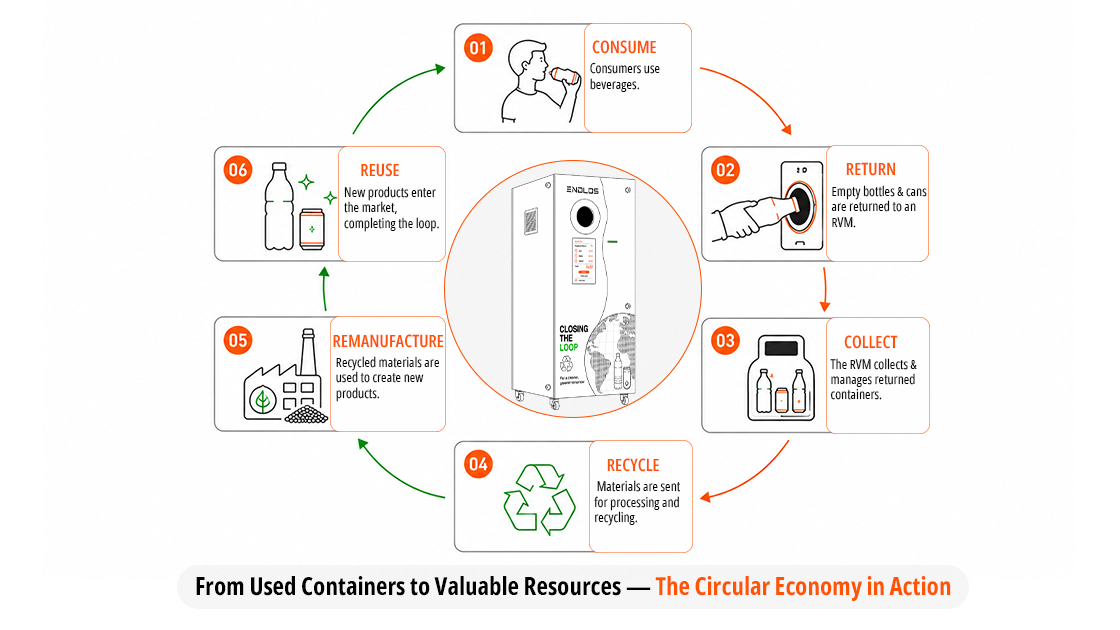
- 01Consume: Consumers use beverages.
- 02Return: Empty bottles and cans are returned to an RVM.
- 03Collect: The RVM collects and manages returned containers.
- 04Recycle: Materials are sent for processing and recycling.
- 05Remanufacture: Recycled materials are used to create new products.
- 06Reuse: New products enter the market, completing the loop.
For beverage packaging, this means that a used PET bottle or aluminium can should not simply become rubbish after consumption. When collected through an effective recycling system, the material can be processed and used as a resource for new products and packaging.
This is one of the key reasons why circular economy recycling depends on effective collection systems.
How Do Reverse Vending Machines Support the Circular Economy?
Reverse vending machines support the circular economy by helping collect, identify, and manage used beverage containers so valuable materials can be recovered and sent into the recycling process.
A consumer inserts an eligible container into the machine, which can identify and validate the item based on the system and technology being used. The container is then collected for further handling and recycling.
The process helps create a clearer journey between consumption and material recovery. This simple process demonstrates the important role of reverse vending machines and the circular economy.
1. Reverse Vending Machines Improve Container Collection
One of the first challenges in recycling is collecting materials effectively. A bottle cannot be recycled if it never enters the recycling system. Reverse vending machines provide a dedicated collection point where consumers can return used beverage containers, such as PET bottles and aluminium cans.
For consumers, the process is straightforward:
- 01Purchase and consume a beverage.
- 02Keep the empty container.
- 03Return the container through an appropriate collection system.
- 04The container enters the recycling process.
In deposit return scheme environments, the return process can also be connected with a financial incentive or deposit mechanism. Better collection can help increase the availability of recyclable material for processing and support more efficient material recovery.
2. Reverse Vending Machines Help Improve Material Recovery
Collection is only the beginning of the recycling journey. For materials to be successfully recycled, they need to move through an organised collection and processing system.
Advanced Reverse Vending Machines can use technologies to identify and validate containers. Depending on the machine and configuration, they may also collect, separate, or compact returned materials.
This can help make container collection more organised before materials are transported for further processing. The overall process can include:
- Container identification
- Validation
- Collection
- Compaction
- Storage
- Transportation
- Material processing
- Recycling
By supporting a structured collection process, automated recycling technology can help businesses and recycling systems manage beverage containers more efficiently.
3. Keeping Valuable Materials in the Production Cycle
The central idea behind the circular economy is simple: waste should be viewed as a potential resource. Plastic bottles and aluminium cans contain materials that can have value beyond their first use.
When these materials are properly collected and processed, they can potentially be transformed into recycled material for future applications. This is why closed-loop recycling is an important concept in the circular economy.
The goal is to keep valuable materials circulating through the economy rather than continuously relying on new raw materials.
What Happens to a Bottle After It Enters a Reverse Vending Machine?
When a consumer inserts a container into a reverse vending machine, several steps can take place depending on the technology and configuration of the machine.
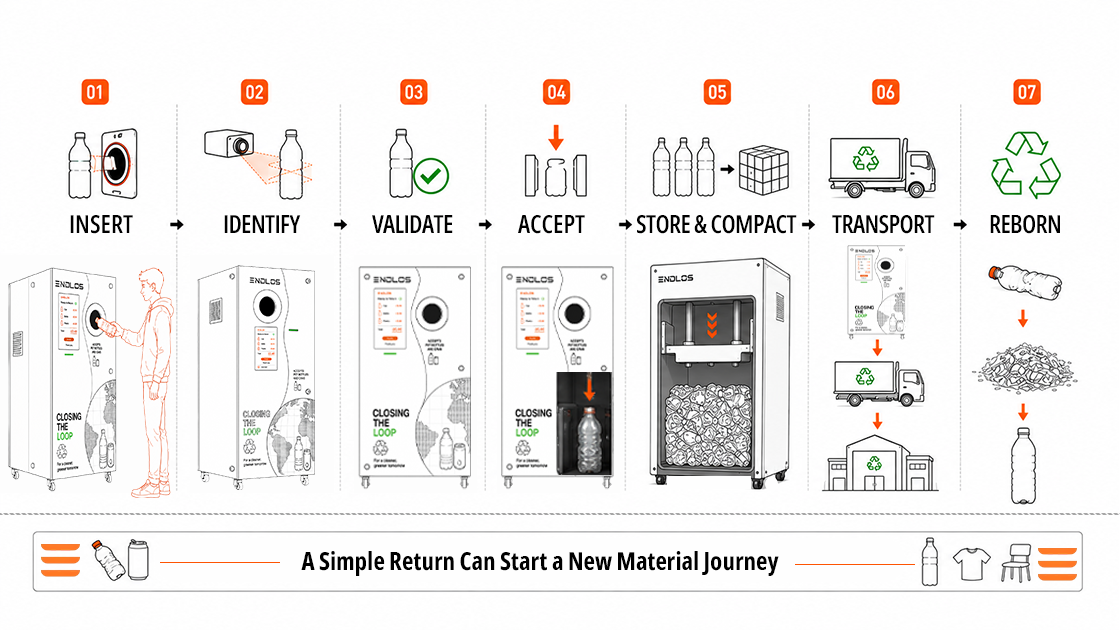
- 01The container is inserted: The consumer places an empty bottle or can into the machine.
- 02The container is identified: The system can inspect the container to determine whether it meets the relevant acceptance criteria.
- 03The container is validated: Depending on the collection or deposit return scheme system, the container may be validated before being accepted.
- 04The container is collected: Accepted containers are moved into the machine's storage area.
- 05The material may be compacted: Some commercial reverse vending machines can compact containers to help optimise storage and collection capacity.
- 06Containers move through the recycling chain: Collected materials are eventually transported for sorting, processing, and recycling.
The journey does not end when the consumer returns the bottle. That return is simply the beginning of the material's next lifecycle.
To learn more about the complete recycling journey, read our guide on what happens to bottles and cans after they are returned through a reverse vending machine.
The Role of Deposit Return Schemes in the Circular Economy
A Deposit Return Scheme (DRS) is designed to encourage consumers to return eligible beverage containers for collection and recycling. The basic concept is straightforward.
A deposit is associated with an eligible container, and the consumer can receive the relevant refund when the container is returned through the approved system.
Reverse vending machines can play an important role in this process by helping automate container returns.
The relationship can be understood like this:
- Deposit Return Scheme → encourages returns
- Reverse Vending Machine → helps collect and validate containers
- Recycling Infrastructure → processes recovered materials
Together, these systems can support a more organised approach to beverage container collection.
For businesses preparing for the UK's evolving recycling landscape, understanding the UK Deposit Return Scheme and its requirements is an important step. Learn how businesses can prepare for DRS implementation in our complete DRS Guide.
How Reverse Vending Machines Can Help Reduce Recycling Contamination
One of the challenges facing recycling systems is contamination. When unsuitable materials are mixed into recyclable waste streams, it can make the sorting and recycling process more difficult.
Reverse vending machines can help create a more controlled collection process by accepting containers based on the criteria and technology configured within the system. This can support:
- More organised container collection
- Better separation of accepted materials
- Reduced mixing with general waste
- Improved handling of returned beverage containers
While no collection system can solve every recycling challenge on its own, a structured and technology-supported process can contribute to improved material management.
How RVMs Support Businesses and Sustainable Recycling Systems
Businesses, retailers, universities, and other organisations are increasingly looking for practical ways to improve recycling infrastructure.
A Smart Recycling Solution UK needs to do more than simply collect waste. It should support efficient operations, provide a positive user experience, and help organisations manage returned materials effectively.
Depending on the system and machine configuration, reverse vending machine solutions can support the following:
- Automated container collection
- Improved recycling engagement
- More efficient material handling
- Reduced manual collection processes
- Container validation
- Compaction and storage
- Operational data and reporting
- Preparation for Deposit Return Scheme requirements
For organisations considering automated container collection, choosing the right machine depends on factors such as expected return volumes, available space, accepted materials, and operational requirements.
Reverse Vending Machines & Consumer Participation
Technology alone cannot create a circular economy. Consumer participation is equally important. People need convenient and accessible ways to return recyclable materials.
A reverse vending machine can help make this process more visible and straightforward. Instead of asking consumers to simply place a container into a general recycling bin, an RVM creates a dedicated interaction:
Use → Return → Collect → Recycle
This can help make consumers more aware of the value of the materials they are returning. When combined with effective recycling infrastructure and deposit return schemes, convenient collection systems can encourage greater participation in container recovery.
The Role of Smart Recycling Technology
The future of recycling is becoming increasingly connected with technology. Modern recycling systems can generate information that helps organisations understand collection activity and manage operations.
Depending on the technology used, smart recycling systems may provide insights into areas such as the following:
- Container volumes
- Collection activity
- Machine operations
- Material management
- Return patterns
As recycling infrastructure continues to evolve, smart recycling machines and automated collection technologies are likely to play an increasingly important role.
RVMs & The Future of the Circular Economy
The transition towards a circular economy requires more than good intentions. It requires practical infrastructure. Consumers need convenient return points. Businesses need efficient collection systems. Recycling facilities need access to recoverable materials.
Reverse vending machines can form one part of this wider infrastructure. They connect consumers with the recycling system at the point where a used container begins its next journey. As the Deposit Return Scheme UK and modern recycling systems continue to develop, the role of automated collection technology is likely to become increasingly important.
The future of recycling may involve:
- More convenient container return points
- Smarter collection technology
- Better material tracking
- Improved recycling infrastructure
- Greater consumer participation
- More efficient material recovery
- Increased use of recycled materials
These developments can all contribute towards the broader goal of keeping valuable resources in circulation for longer.
Conclusion
A circular economy depends on keeping valuable materials in use rather than allowing them to become waste after a single lifecycle. For beverage containers, effective collection is a critical part of that journey.
Reverse vending machines support the circular economy by helping consumers return bottles and cans, improving organised collection, and supporting the recovery of valuable materials. From PET bottles to aluminium cans, every properly collected container represents an opportunity to keep materials moving through the economy.
As recycling systems become smarter and deposit return schemes continue to develop, technologies such as reverse vending machines can play an increasingly important role in building efficient, modern, and more circular recycling infrastructure.
Preparing for the UK Deposit Return Scheme?
Talk to the Endlos team about the right reverse vending machine for your site's footfall, space, and accepted materials.
Frequently Asked Questions
A reverse vending machine supports the circular economy by helping collect and manage used beverage containers so materials such as PET and aluminium can enter the recycling process instead of becoming general waste.


